For OEM buyers evaluating CNC machining Vietnam, the real question is not only “Can this supplier make the part?” but “Can they control quality, documentation, lead time, and cost at production scale?” This guide explains how to assess Vietnamese CNC machining partners, what affects pricing, which technical capabilities matter, and how Trans Machine Technologies supports global transportation, mining, and automotive manufacturers with ISO 9001-certified precision manufacturing.
Vietnam has become a serious option for companies seeking resilient supply chains outside traditional manufacturing hubs. The country offers a strong industrial labor base, improving logistics, competitive production economics, and a growing network of precision manufacturers serving export markets. For engineered components, however, low cost is never enough. You need repeatability, process discipline, material traceability, and a supplier that understands OEM expectations.
Why OEMs Are Considering CNC Machining Vietnam
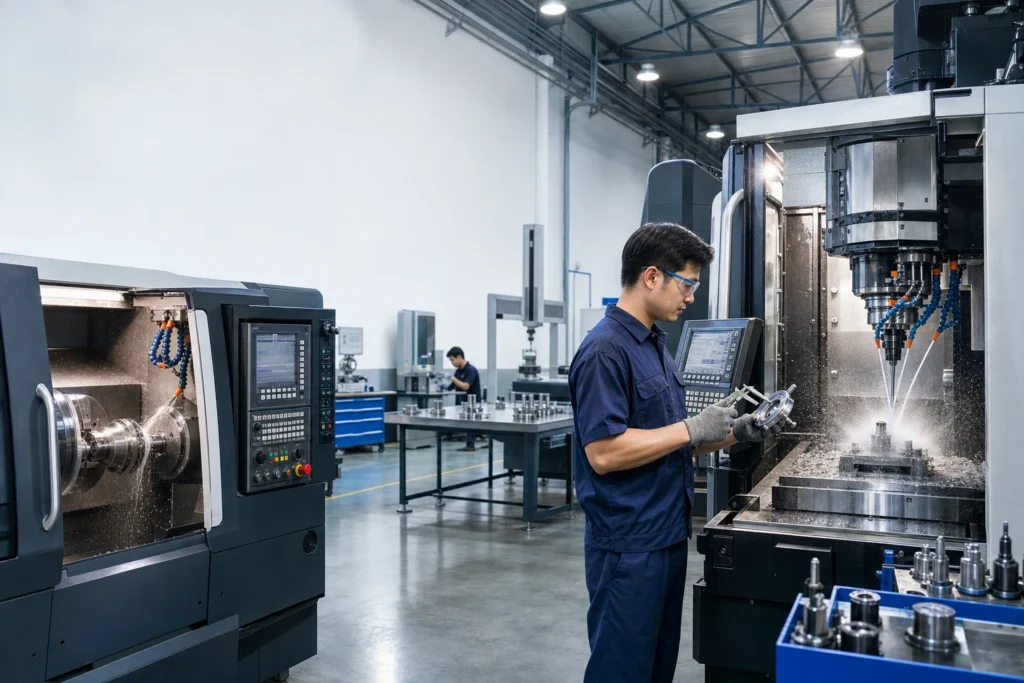
Global manufacturers are under pressure to reduce risk while maintaining quality. Tariff exposure, long lead times, single-country dependency, and capacity constraints have pushed many sourcing teams to compare suppliers across Southeast Asia. In that context, CNC machining Vietnam has gained attention for several practical reasons.
First, Vietnam has built a solid base in export manufacturing. Industrial zones near major ports help support international shipping, while suppliers serving global customers are increasingly familiar with inspection reports, drawings in international standards, and customer-specific quality requirements.
Second, the labor and operating cost structure can be favorable for medium- to high-complexity machined parts. Savings are most visible when a project combines machining with related manufacturing steps such as welding, casting, forging, surface treatment, and assembly coordination.
Third, Vietnam is well positioned for supply chain diversification. Many OEMs do not want to replace one dependency with another; they want qualified secondary or regional suppliers that can absorb demand changes without compromising engineering control.
For transportation, mining, and automotive applications, this makes Vietnam attractive—but only when suppliers can prove capability through documented processes, stable equipment, qualified people, and a culture of continuous improvement.
What to Look for in a CNC Machining Vietnam Supplier
Choosing a supplier for precision parts is different from buying catalog items. A capable CNC machining Vietnam partner should be evaluated through engineering, quality, commercial, and communication criteria.
1. Quality system and process control
ISO 9001 certification is a useful starting point because it indicates that the manufacturer has a documented quality management system. It does not guarantee perfect parts, but it does show that processes such as corrective action, document control, and supplier management are formally managed. You can learn more about the standard from the International Organization for Standardization.
Ask how the supplier controls:
- Incoming material verification and certificates
- First Article Inspection (FAI) and in-process inspection
- Calibration of measuring equipment
- Nonconformance reporting and corrective actions
- Revision control for drawings and specifications
- Final inspection reports and packing checks
2. Engineering review before quotation
A strong machining supplier should not simply quote a drawing. They should review tolerances, datum structure, material selection, surface finish requirements, heat treatment notes, and critical-to-function dimensions. This design-for-manufacturing feedback helps reduce scrap, shorten cycle time, and prevent avoidable cost.
For example, a tight tolerance on a non-functional surface may add setup time and inspection burden without improving performance. A professional supplier will flag that issue and suggest alternatives before production begins.
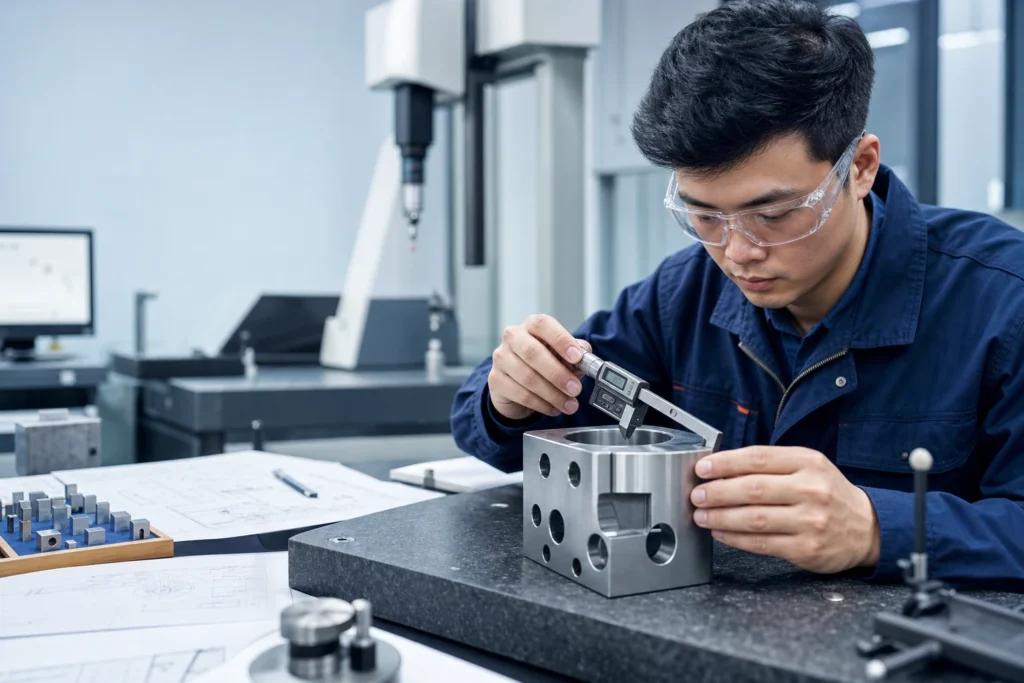
3. Equipment fit and production repeatability
Modern CNC mills, turning centers, fixtures, and inspection tools are important, but capability depends on how they are used. Repeatability comes from the combination of machine condition, tooling strategy, fixture design, operator training, inspection planning, and preventive maintenance.
For OEM programs, ask whether the supplier can support prototypes, pilot runs, and repeat production under the same control plan. This is especially important when sourcing safety-related, wear-resistant, or load-bearing components.
Materials, Tolerances, and Part Types Commonly Machined
A well-qualified CNC machining Vietnam supplier can work with a range of materials depending on part application, annual volume, and post-processing requirements. Transportation and mining components often require durability, while automotive components may emphasize weight, repeatability, and cost control.
Common material categories include carbon steel, alloy steel, stainless steel, aluminum, cast iron, and non-ferrous alloys. Some components begin as castings or forgings and are then CNC machined to achieve precise dimensions, mating surfaces, bores, threads, and sealing features.
| Sourcing factor | What it means for OEM buyers | Why it matters |
|---|---|---|
| Material route | Bar stock, casting, forging, or welded fabrication | Affects cost, strength, machining allowance, and lead time |
| Tolerance level | General, precision, or critical-to-function dimensions | Determines process planning, fixturing, and inspection effort |
| Surface finish | As-machined, ground, coated, painted, plated, or heat treated | Influences wear resistance, corrosion performance, and assembly |
| Batch size | Prototype, low volume, repeat production, or annual contract | Impacts setup cost, tooling investment, and unit price |
| Documentation | FAI, material certificates, inspection reports, PPAP-style files | Supports traceability and customer approvals |
In many industrial programs, the most efficient approach is not machining alone. A supplier that can coordinate CNC machining with welding, casting, or forging can reduce handoffs and simplify supplier management. Trans Machine Technologies supports integrated precision manufacturing for OEM customers, including CNC machining capabilities, welding and fabrication, and production support for demanding industrial applications.
Cost Drivers in CNC Machining Vietnam Projects
Cost advantages are one reason buyers explore CNC machining Vietnam, but unit price depends on more than hourly machining rates. The most accurate quotes come from a complete technical package and a shared understanding of production expectations.
Major cost drivers include:
- Material type and availability: Specialty alloys, certified material, and imported stock may increase cost and lead time.
- Machining time: Deep pockets, thin walls, tight bores, complex 3D surfaces, and multiple setups increase cycle time.
- Tolerance and inspection burden: The tighter the tolerance, the more attention required for tooling, thermal stability, fixturing, and measurement.
- Surface treatment and secondary operations: Coating, painting, heat treatment, grinding, assembly, and packaging all affect total landed cost.
- Volume and repeatability: Higher volumes may justify custom fixtures, dedicated tooling, and process optimization.
- Documentation level: Full traceability packages require time, discipline, and quality resources.
A practical sourcing mistake is comparing quotes without checking assumptions. One supplier may include material certificates, inspection reports, protective packaging, and export documentation, while another may not. For a fair comparison, request a quote that clearly separates tooling, material, machining, secondary operations, inspection, packaging, and freight terms.
According to the overview of numerical control and CNC machining, CNC processes rely on programmed control of machine tools. In real production, however, the program is only one part of the result. Tool wear, coolant, fixturing, setup verification, and operator discipline determine whether every shipment matches the drawing.
Quality Assurance: From Drawing Review to Shipment
For engineered components, quality should be built into the process rather than inspected only at the end. A reliable CNC machining Vietnam manufacturer will typically follow a structured workflow.
Step-by-step quality workflow
- Technical review: Confirm drawing revision, specifications, material, tolerances, and critical features.
- Manufacturing planning: Define operation sequence, fixtures, tooling, inspection checkpoints, and control plan.
- First article approval: Machine initial parts, measure key dimensions, and resolve deviations before volume production.
- In-process control: Monitor critical features during production to catch drift early.
- Final inspection: Verify dimensions, finish, quantity, marking, and packaging before shipment.
- Corrective action: Analyze root causes if nonconformance occurs and prevent recurrence.
Trans Machine Technologies operates from Vietnam and has served global customers since 1997. The company’s ISO 9001-certified system supports precision manufacturing for transportation, mining, and automotive OEMs that require reliable parts and responsive communication. For buyers, this experience matters because global supply is not only about making parts—it is about managing risk across drawings, materials, inspections, documentation, and logistics.
Vietnam vs. Other CNC Machining Locations
Sourcing decisions should consider total value, not just piece price. CNC machining Vietnam can be a strong fit when buyers need export-oriented manufacturing, competitive cost, and a supplier capable of supporting engineered components.
| Location consideration | Vietnam advantage | Buyer watchpoint |
|---|---|---|
| Cost competitiveness | Attractive labor and operating structure | Validate total landed cost, not only unit price |
| Supply chain diversification | Reduces dependence on a single sourcing country | Qualify suppliers carefully before transferring production |
| Engineering communication | Many export suppliers work with international drawings | Confirm English communication and revision control process |
| Integrated manufacturing | Potential to combine machining, welding, casting, forging | Audit capability for each required process |
| Lead time | Good access to regional ports and industrial zones | Confirm material availability and shipping schedule |
The best results often come from a phased qualification plan: prototype or sample order, first article inspection, pilot batch, then production release. This approach gives both buyer and supplier time to refine the process before full-volume commitments.
How to Prepare an RFQ for Better Results
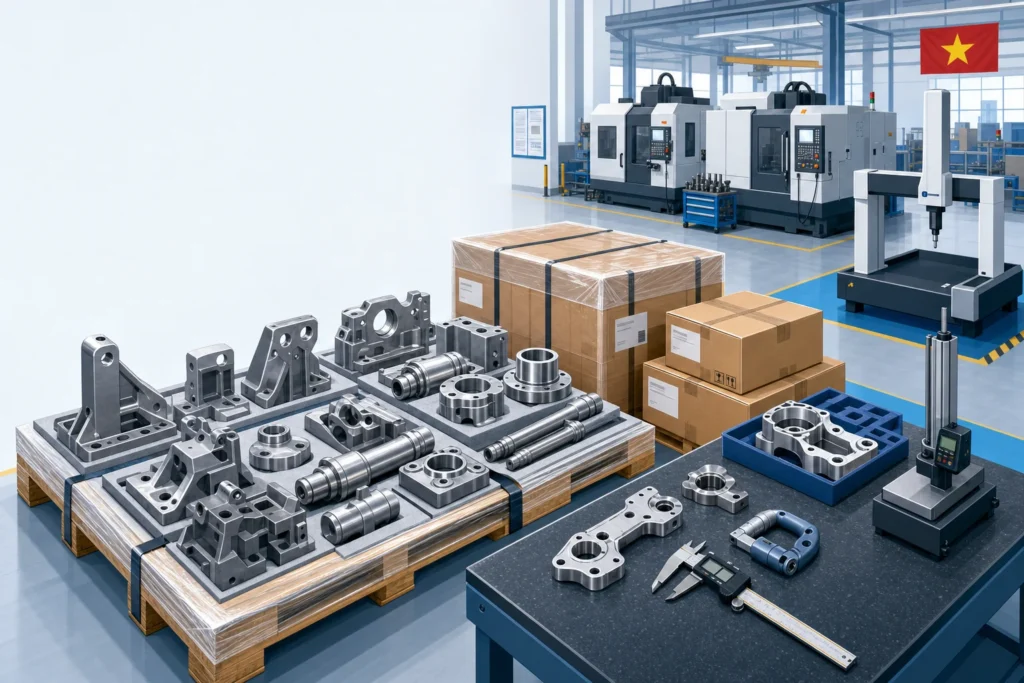
A clear RFQ helps any CNC machining Vietnam supplier quote faster and more accurately. It also reduces misunderstandings that can lead to delays or cost changes after purchase order release.
Include the following information whenever possible:
- 2D drawings with revision number and units
- 3D CAD files if available, such as STEP or IGES
- Material grade and required certifications
- Annual volume, batch size, and forecast pattern
- Critical dimensions and inspection requirements
- Surface finish, coating, painting, or heat treatment specifications
- Packaging, labeling, and shipping requirements
- Target Incoterms and destination country
- Required quality documents, such as FAI or material certificates
If your part is currently produced elsewhere, share known pain points. Common issues include inconsistent dimensions, burrs, coating failures, late shipments, excessive scrap, or poor packaging. A good supplier can use that information to design a more robust manufacturing plan.
For new projects, early supplier involvement can reduce cost. Trans Machine Technologies can review drawings, discuss manufacturability, and recommend an efficient production route. To start a technical discussion, contact the team through the request a quote page.
FAQ
Is CNC machining Vietnam suitable for OEM production?
Yes. CNC machining Vietnam can be suitable for OEM production when the supplier has the right quality system, equipment, inspection capability, material controls, and export experience. Buyers should qualify suppliers through samples, first article inspection, and production audits.
What industries use CNC machined parts from Vietnam?
Common industries include transportation, mining, automotive, industrial equipment, agriculture, and general machinery. Trans Machine Technologies focuses on precision manufacturing for transportation, mining, and automotive OEM customers.
How do I evaluate the quality of a Vietnamese CNC machining supplier?
Review ISO 9001 certification, inspection equipment, calibration records, sample reports, material traceability, corrective action process, and customer references. A factory audit or pilot order is recommended before moving to full production.
What information should I send for a CNC machining quote?
Send 2D drawings, 3D files, material grade, quantity, tolerances, finish requirements, inspection needs, packaging requirements, and delivery expectations. The more complete the RFQ, the more accurate the quotation.
Can CNC machining be combined with casting, forging, or welding in Vietnam?
Yes. Many industrial parts are produced through a combination of casting, forging, welding, and CNC machining. Working with an integrated supplier can reduce handoffs, improve accountability, and simplify project management.
Conclusion: Build a More Resilient Precision Supply Chain
Choosing the right CNC machining Vietnam partner can help OEMs improve supply chain resilience, control cost, and maintain the quality required for demanding industrial applications. The key is to look beyond price and evaluate engineering support, quality systems, production discipline, and communication.
If you are sourcing precision components for transportation, mining, or automotive applications, Trans Machine Technologies can help review your requirements and propose a practical manufacturing route. Share your drawings and project details to request a technical quotation from an ISO 9001-certified manufacturer in Vietnam.